Columbus Day Ship T-shirt Design Review for Real Projects
First Impressions and Visual Personality
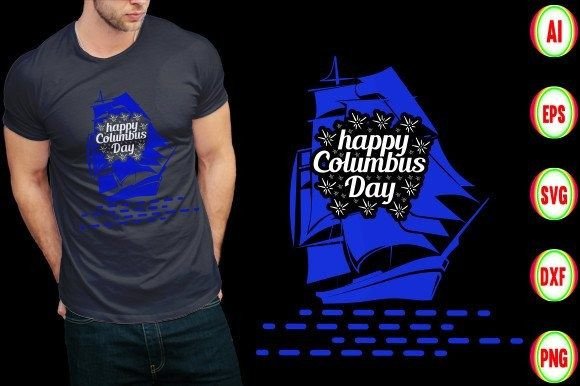
The Columbus Day Ship T-shirt Design immediately sets a nostalgic, adventurous tone with its classic ship illustration. It’s clear this design is crafted for those who want to celebrate history in a stylish and customizable way. The layered structure allows for easy editing of text and placement, which is a big plus for any embroidery designer or small business owner looking to personalize the message. The ship itself has a clean vector style that feels both timeless and modern—perfect for a wide range of handmade products.Performance in Real-Life Embroidery Scenarios
I tested the Columbus Day Ship T-shirt Design on a few different materials to see how it holds up in real-life embroidery situations. On medium-weight cotton blends, the design stitched cleanly with minimal distortion, even when I used a slightly higher stitch density to add depth. On flannel, I had to adjust my stabilizer use to keep the fill areas from puckling, which is something every experienced embroiderer knows to do.
- Tote Bags: Great for larger hoop sizes, the design looks bold and well-proportioned. A good choice for holiday gifts or boutique product lines.
- Sweatshirts: The layers and editable text make it perfect for adding a personal touch to custom orders. Just ensure the fabric is stabilized properly before stitching.
- Baby Clothes: The design can be scaled down, but care must be taken with small details like the sails and rigging. It might not be suitable for infants due to the potential for bulk from dense stitches.
- Patches and Aprons: The structure is solid for applique-style work. When converting to an embroidered patch, the individual layers help maintain sharpness and clarity.
- Printable Mockups: As a digital embroidery file (AI, EPS, SVG, DXF, PNG), it integrates smoothly into mockup designs for online listings or promotional material.
One thing I noticed right away is that the design performs best when given adequate space. If you’re working within tight constraints, say on a cap or hat, you may need to simplify or reposition elements. The ship illustration has fine lines and intricate parts that could get lost if scaled too small. Always test the design on scrap fabric first to evaluate how it behaves under your specific settings.
Where to Use Carefully
- Small Hoop Sizes: The detailed parts of the ship may not translate well in smaller hoops. Be sure to confirm the minimum hoop size required before finalizing your project.
- Stretchy Fabrics: Stretchy materials like spandex or stretch cotton can cause distortion during stitching. Use a cutaway stabilizer or avoid these fabrics altogether.
- Thin or Delicate Fabrics: Thin materials like silk or rayon may struggle with the weight of the design, especially in dense stitch areas. Opt for lighter coverage or alternative placements.
- Dark Fabric: Without proper thread contrast, the design may appear muted or flat. Consider using metallic threads or white outlines for better visibility.
- Curved Surfaces: Embroidering onto curved surfaces like caps or hats requires seam rippling techniques and extra stabilizer to keep the design from shifting.
- Products with Frequent Washing: Designs with high stitch density or specialty threads may wear faster. Choose durable threads and consider the item’s lifespan before recommending it for sale.
Designer Notes for Practical Application
- Always test the design on scrap fabric to check for stitch behavior and overall appearance.
- Review the stitch density settings—adjust as needed depending on the fabric type and desired effect.
- Confirm the hoop size requirements. Some machines may need a larger hoop than others.
- Inspect the small details, such as the ropes and sails. These can be fragile if not handled correctly.
- Use appropriate stabilizers to support the design, especially on stretchy or thin materials.
- Check whether the design is suitable for commercial embroidery or only for personal use. Licensing terms aren't provided, so be sure to verify them before selling finished products or digital assets.